
1. Questions
Small Amazonian communities near Manaus, Brazil are not connected to the road network and rely on river transport as their primary means of passenger mobility, despite being near a large metropolitan area (do Norte Filho and Fraxe 2022). Most of these communities are located within the Tupé Sustainable Development Reserve (Pontes 2016), a protected area along the Rio Negro, roughly 8km from the western edge of Manaus. In the face of this reliance on waterways, the organization of transport services serving these communities is undocumented, particularly for short-distance connections linking urban access points to nearby settlements.
This case study addresses three descriptive questions with an observational field study approach. First, what vessel types and service modes provide passenger access to road-disconnected communities in the Tupé region? Second, how are routes, fares, and service frequencies organized for these connections? Third, how does everyday mobility function within communities once river access points are reached? This study builds on a growing body of research on informal and alternative passenger transport systems, which documents how flexible, demand-responsive services often emerge to fill mobility gaps left by formal networks. Prior work on informal road transport, paratransit, and alternative mobility systems highlights their operational diversity, adaptive routing, and context-specific roles in providing access where conventional transport infrastructure is limited or absent (Kerzhner 2022; Victory and Ahmed 2022; Finck Carrales 2025; Nichols et al. 2025). By providing a first systematic description of these services, the study offers a baseline from which future research can examine accessibility, service integration, equity, and governance in river-based transport systems serving road-disconnected communities.
2. Methods
Field observations were conducted on 29–30 June 2025 in the Marina do Davi area of Manaus and along connecting waterways serving communities located within and adjacent to the Tupé Sustainable Development Reserve, including Nossa Senhora do Livramento. Observations were carried out in collaboration with representatives of the local government of Nossa Senhora do Livramento. The research methods used are described in more detail in the Appendix.
Three data sources were used. First, direct observation of vessels, boarding points, and passenger movements was conducted at Marina do Davi and along nearby waterways. Second, photographic documentation was collected to record vessel types and operating contexts. Third, an official fare table published by ACAMDAF (Cooperativa dos Profissionais de Transporte Fluvial da Marina do Davi; “Marina do Davi River Transport Professionals’ Cooperative”) (ACAMDAF 2025) was collected to document destinations and prices.
Vessels were categorized into operational types based on visible design features and observed use. Approximate service frequencies and operating hours were recorded through observation of departures during the fieldwork period. All observations were made from public or community-authorized access points. The study focuses on systematically documenting observable transport operations rather than on eliciting subjective accounts from operators or passengers.
3. Findings
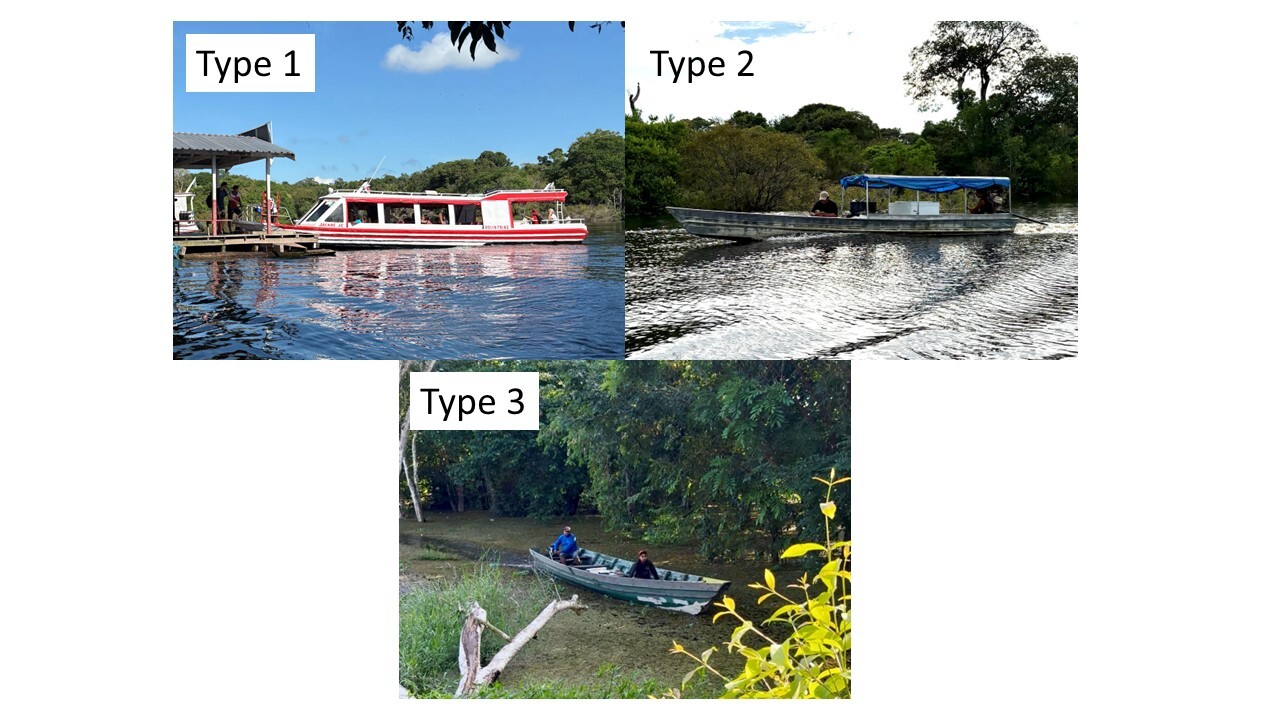
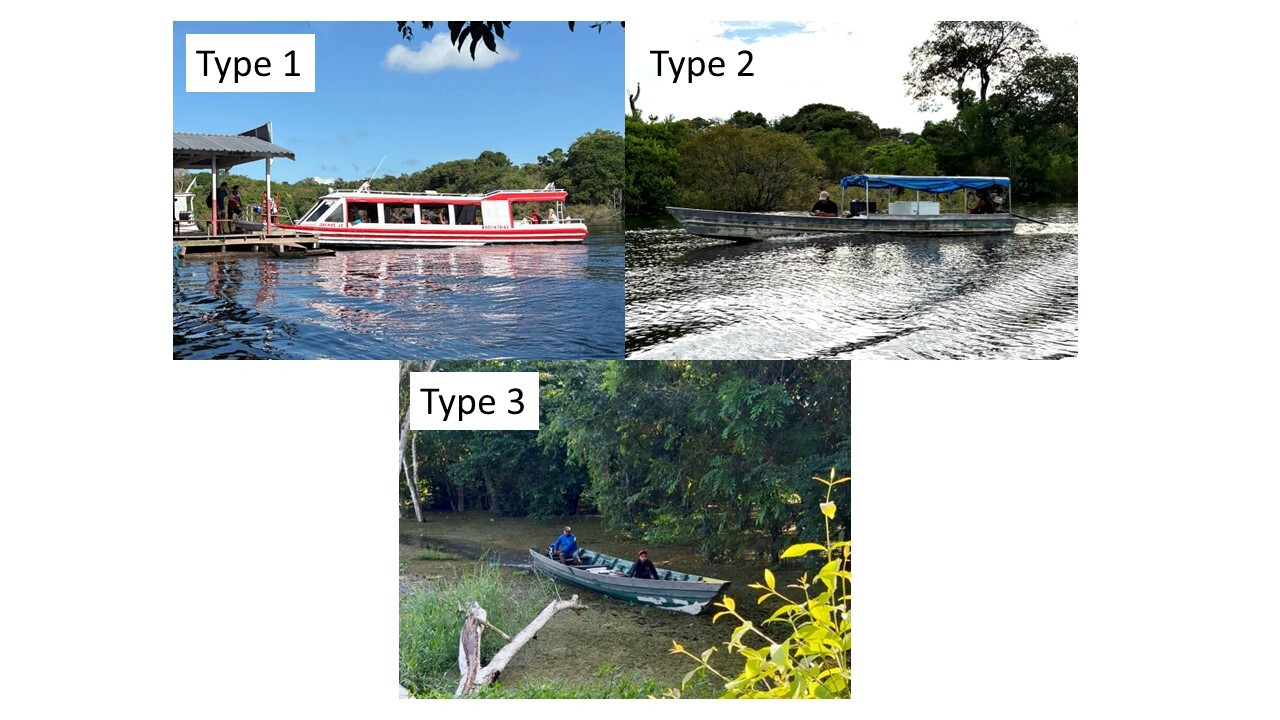
As shown in Figure 1, three distinct vessel types were consistently observed serving communities without road access. The first type consists of cooperative passenger boats operated by ACAMDAF from Marina do Davi. These vessels typically carry up to approximately 15 passengers and serve named communities along fixed river routes. During observed service hours (approximately 7am to 6pm), departures occurred roughly on an hourly basis or when the vessel reached capacity. Although departures were not scheduled at fixed times, this operating pattern produced predictable daytime service frequency. The second type consists of covered small aluminium motorboats used by private citizens, merchants, or small passenger groups. These vessels operate on an on-demand basis and were frequently observed outside cooperative service hours. They were used for chartered passenger trips and the transport of small quantities of goods. The third type consists of small handmade wooden boats equipped with low-power motors. These vessels are typically owned and operated by individual households for personal use rather than as part of a passenger service. They were consistently observed for short-distance travel within inlets and between nearby households and settlements and were not observed providing regular transport to or from Manaus.
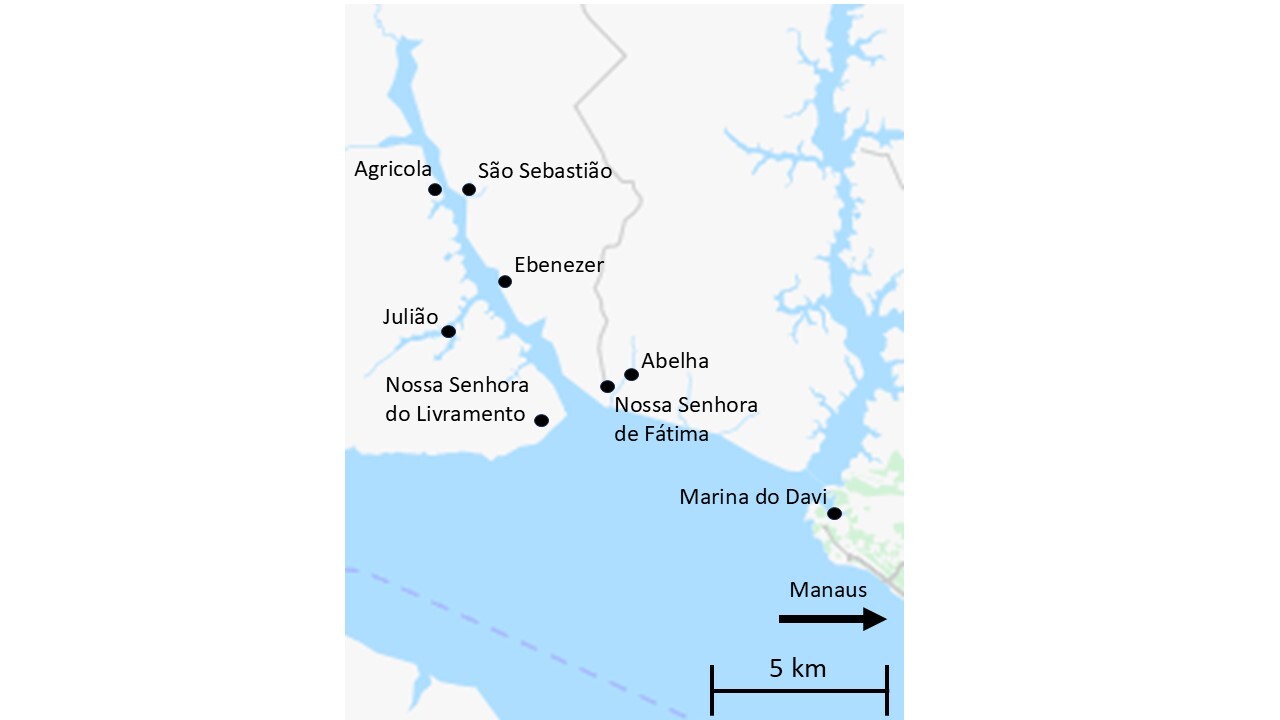
The cooperative service publishes a fare table listing destinations, all of which are shown in Figure 2, intermediate stops, and prices (ACAMDAF 2025). One-way fares from Marina do Davi were R$12 (US$2.22) for Nossa Senhora de Fátima and Nossa Senhora do Livramento; R$13 (US$2.41) for Abelha; R$21 - 24 (US$3.89 - 4.44) for Ebenezer, São Sebastião, and Julião; and up to R$30 (US$5.56) for Agricola. Nossa Senhora de Fátima and São Sebastião are connected by a terrestrial path to Manaus, providing an alternative non-river connection between these two communities. All fares are paid in cash. The further the non-connected communities were located in the inlet, the less infrastructure they benefited from, be it health services, access to education or Internet.
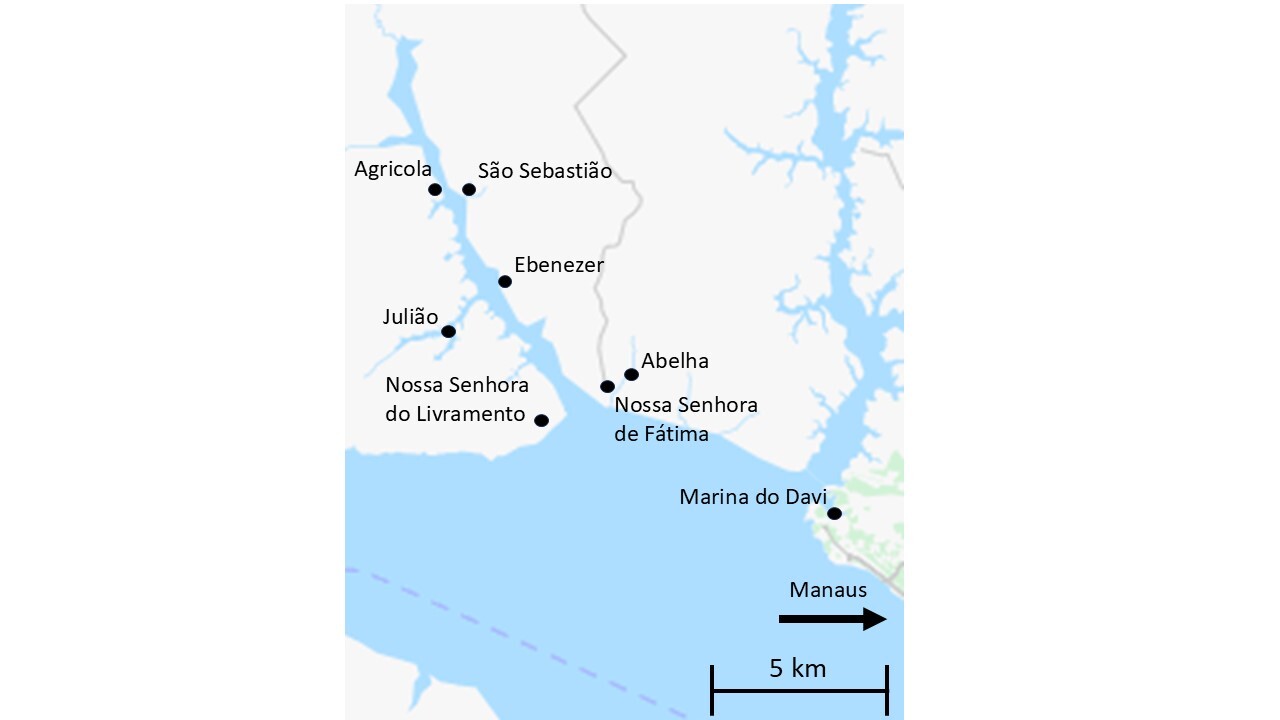
The fare table also specifies prices for travel between selected communities, indicating that passenger transport supports movement between settlements in addition to trips to Manaus. Routes and fares were publicly displayed and stable during the observation period.
Cooperative passenger services (Type 1) operate in a clearly hub-and-spoke configuration centered on Marina do Davi. All observed cooperative vessels departed from Marina do Davi and served only the destinations listed in the published ACAMDAF fare table, without intermediate or informal stops. Trips were directional and followed a stable sequence of communities, typically beginning with the settlement closest to Manaus and proceeding toward more distant communities within the inlet. This order of stops was consistent across observed trips. At any given time during operating hours observed, two to three cooperative vessels were typically present at Marina do Davi, and vessels were almost always at or near full capacity before departure. Outside Marina do Davi, more than one cooperative vessel was never observed waiting for passengers, suggesting that passenger accumulation occurs primarily at the hub rather than at community-level boarding points.
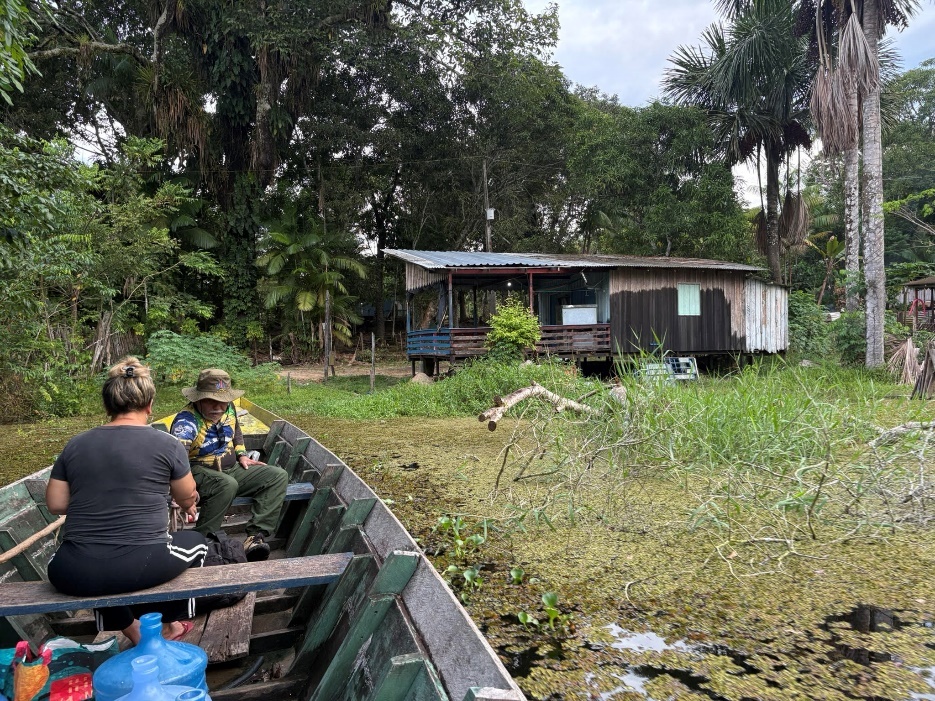
Private covered aluminium motorboats (Type 2) operated under a more flexible spatial logic. These vessels were observed traveling both between Marina do Davi and communities and directly between communities, often stopping at residences or small businesses that were not formal cooperative boarding points. Their operations appeared oriented toward point-to-point travel rather than within-community circulation. In contrast, small household-owned wooden boats (Type 3) were not observed traveling to Manaus and operated almost exclusively within inlets and within communities. These vessels played a critical role in everyday mobility where roads were absent or seasonally inaccessible due to flooding and frequently functioned as first- and last-mile connectors linking households to cooperative passenger services. Most households with direct river access possessed at least one wooden boat, and in several cases more than one. These vessels are used for everyday activities such as visiting nearby households, accessing services, and traveling between closely spaced settlements along local waterways. They frequently interfaced with cooperative services: it was not uncommon to observe family members meeting arriving passengers at ferry stops and transporting them onward by wooden boat to residences or nearby settlements. Their small size and ease of navigating in shallow waters make them ideal for transportation within the seasonally flooded igapó forest in the inlets in the region.
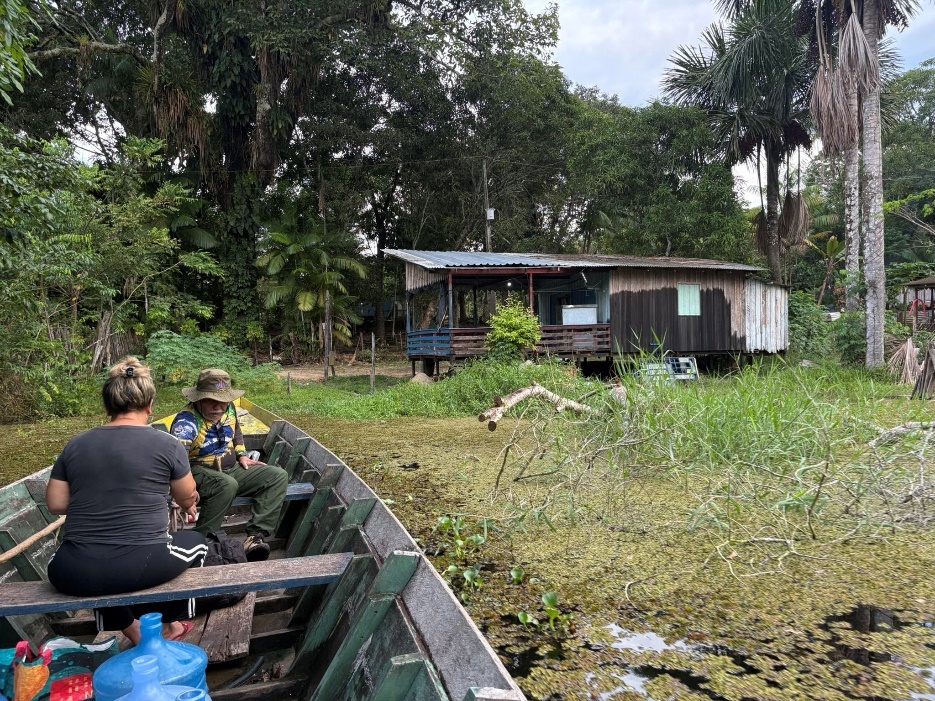
As shown in Figure 3, residences are typically built on stilts over water to accommodate seasonal flooding, and no four-wheeled motor vehicles on land were observed in the communities visited. Household-owned wooden boats used in the narrow passages of the flooded igapó forest surrounding the communities therefore function as the primary mode of intra-community transport.
Acknowledgements
The authors thank the local government of Nossa Senhora do Livramento for guidance and collaboration during field observations, including Edmilson Jeronimo and Don Eugenio. The authors also acknowledge the use of ChatGPT for language editing; all observations, analysis, and interpretations remain the responsibility of the authors.