This website uses cookies

We use cookies to enhance your experience and support COUNTER Metrics for transparent reporting of readership statistics. Cookie data is not sold to third parties or used for marketing purposes.

Skip to main content
null
Findings
  • Menu
  • Articles
    • Energy Findings
    • Resilience Findings
    • Safety Findings
    • Transport Findings
    • Urban Findings
    • All
  • For Authors
  • Editorial Board
  • About
  • Blog
  • search
  • X (formerly Twitter) (opens in a new tab)
  • LinkedIn (opens in a new tab)
  • RSS feed (opens a modal with a link to feed)

RSS Feed

Enter the URL below into your favorite RSS reader.

https://findingspress.org/feed
ISSN 2652-8800
Transport Findings
April 08, 2026 AEST

Field Observations of Bicyclist Gender Distribution by Bicycle Infrastructure Type in Toronto, Canada

Linda Rothman, BScOT, PhD, Allison Spearin, BASc, Lauren Pearson, M. Anne Harris, PhD,
bicyclingcitiesbuilt environmentbicycling infrastructuregender
Copyright Logoccby-sa-4.0 • https://doi.org/10.32866/001c.155762
Findings
Rothman, Linda, Allison Spearin, Lauren Pearson, and M. Anne Harris. 2026. “Field Observations of Bicyclist Gender Distribution by Bicycle Infrastructure Type in Toronto, Canada.” Findings, April 7. https://doi.org/10.32866/001c.155762.
Download all (4)
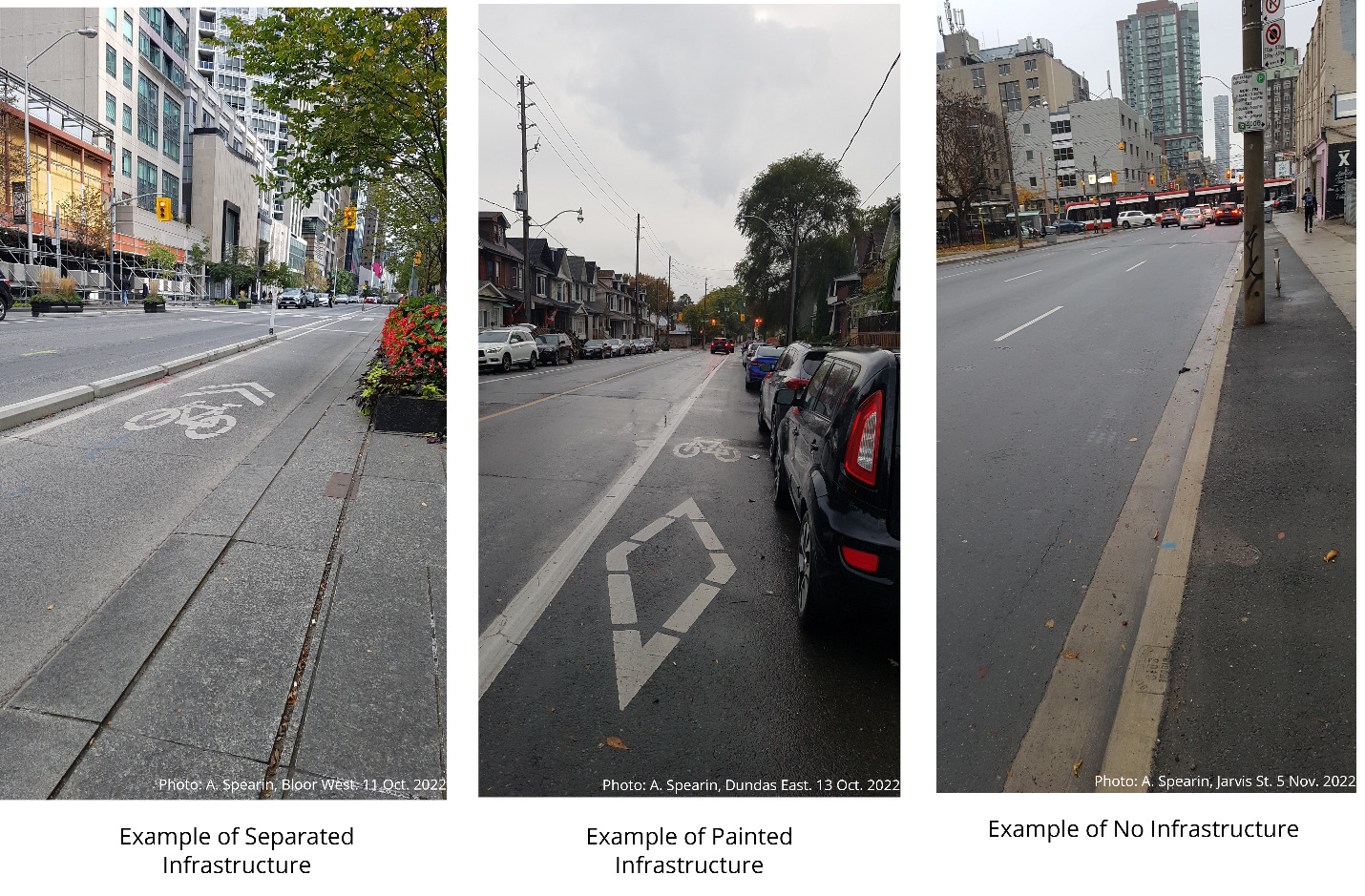
  • Figure 1. Photo example of each type of infrastructure observed in Toronto, Canada in field observations conducted in Fall, 2022.
    Download
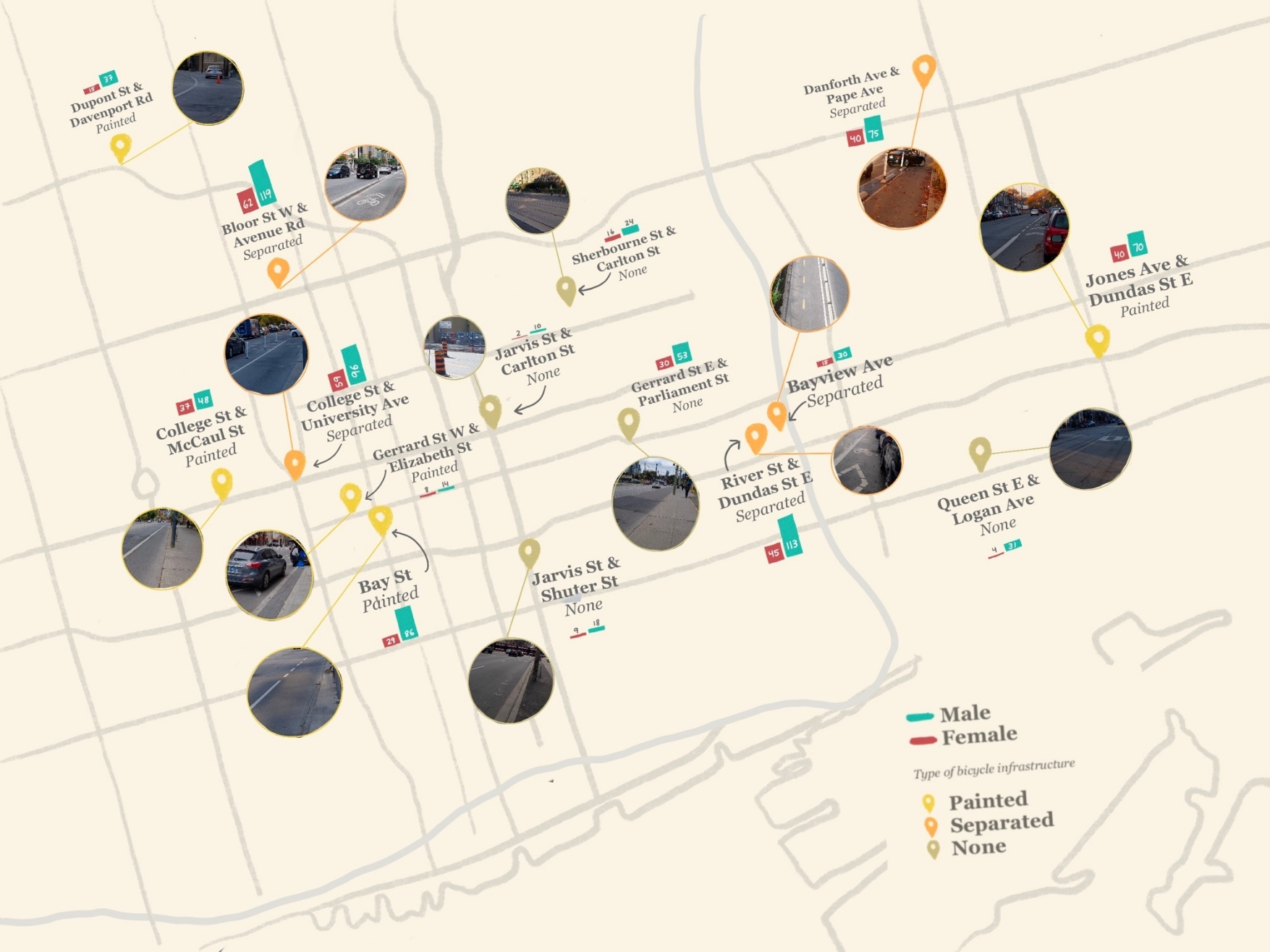
  • Figure 2. Observation locations and field counts of bicyclists by observer-rated gender conducted in Toronto, Canada in fall of 2022.
    Download
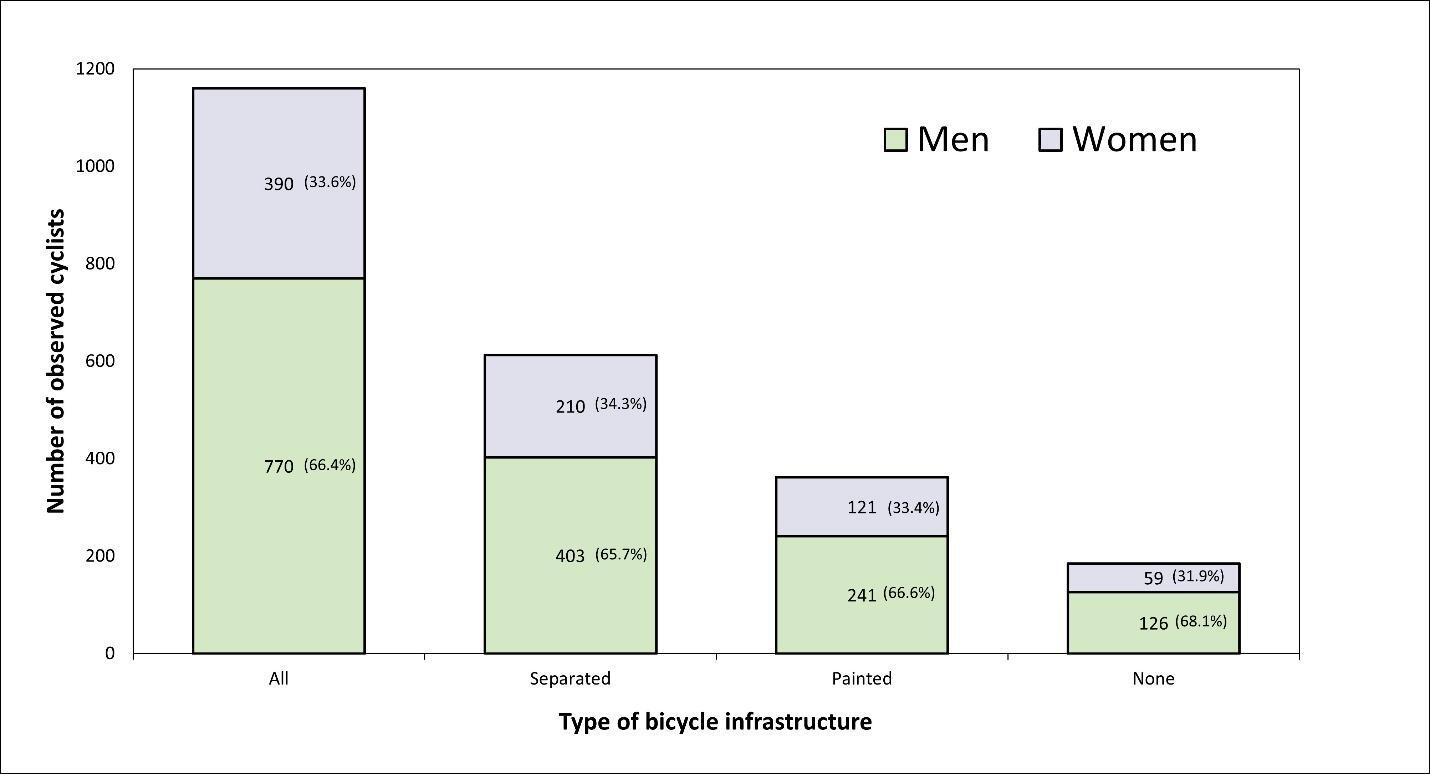
  • Figure 3. Gender distribution of adult bicyclists observed in Toronto, Canada in fall 2022 field observation, by infrastructure type (n=1160) whose gender could be visually assigned.
    Download
  • Supplementary Table
    Download

Error

Sorry, something went wrong. Please try again.

If this problem reoccurs, please contact Scholastica Support

Error message:

undefined

View more stats

Abstract

Low bicycling mode has been associated with ratios of two men for every woman cyclist. We conducted field counts to compare the gender distribution of bicyclists observed in Toronto, Canada on different bicycle infrastructure. We counted 1180 cyclists at 13 locations: 51% on separated infrastructure, 32% on painted lanes, and 16% with no infrastructure. Men outnumbered women 2:1 with no statistically significant difference in gender distribution by infrastructure type in bivariate (𝜒2 = 0.37, df=2, p = 0.83) or multivariate analyses. The quality, discontinuity, and changing nature of bicycling infrastructure may have influenced observed ratios.

1. Questions

Bicycling in Canada is gender-skewed, particularly related to commuting. National health survey data shows that while women represent 43% of leisure cyclists, men outnumber women 2:1 for commuting (Firth et al. 2021). Research suggests that separated bicycling infrastructure can increase both overall cycling mode share and the proportion of women bicycling (Garrard et al. 2008). To our knowledge, no prior field observation studies by route design type have been conducted in Toronto, Canada. Field observations are important as we have previously noted that studying the implementation of interventions is difficult when relying on secondary data from cities which are often inadequate and inaccurate (Rothman et al. 2024). During the COVID-19 pandemic, the City of Toronto accelerated its bicycling infrastructure under its ActiveTO program (Rothman et al. 2024). This study utilized field observations of the new and expanded infrastructure to answer:

  1. What is the overall gender distribution of cyclists in Toronto and across different cycling infrastructure?

  2. Does the gender distribution vary between weekday commuter hours and weekends?

2. Methods

We examined three types of infrastructure: physically separated bicycle lanes (“separated”), painted bicycle lanes (“painted”), and “none” (Table 1, Figure 1), based on Can-BICS classifications emphasizing safety and user comfort (Winters et al. 2020).
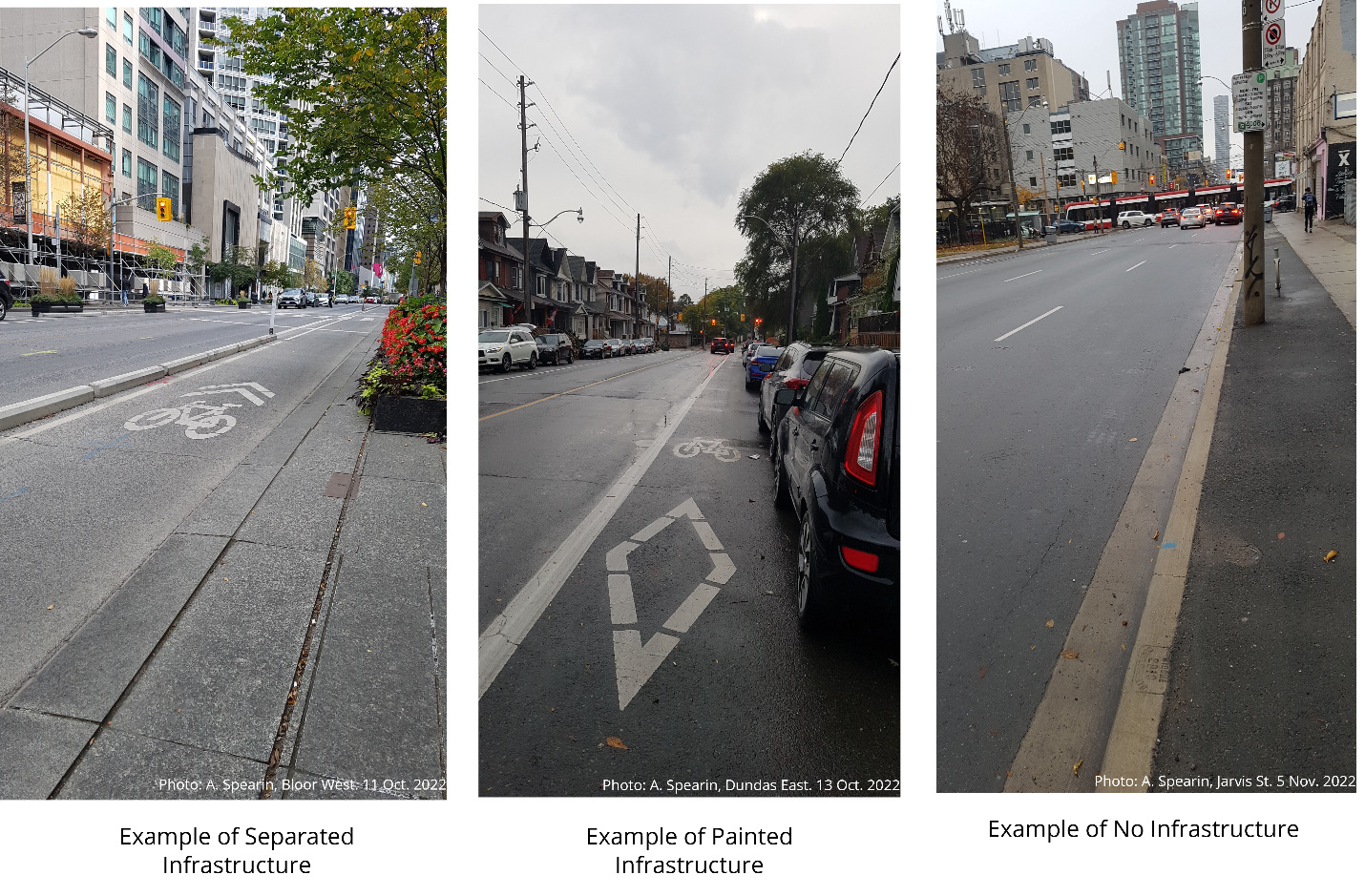
Table 1.Definitions used in field observations of bicyclists in Toronto, Canada
Bicycle Infrastructure Categories Separated Bicycle infrastructure that has a physical divider from the moving automobile traffic, such as a curb, or a line of posts or planters, or the parking lane.
Painted A single painted line creating bicycle infrastructure, usually with a painted bike logo, but no physical barrier that would prevent traffic from driving into the bicycling area.
None Any city street in downtown Toronto without any specific infrastructure for bicycles. This includes sharrows for the purpose of this study
Figure 1
Figure 1.Photo example of each type of infrastructure observed in Toronto, Canada in field observations conducted in Fall, 2022.

Five segments of the new ActiveTO separated infrastructure were selected for observation (Figure 2, details in Supplementary Table), with observations conducted mid-block on the inbound side to the city centre. Four segments were matched with two comparison segments travelling in a similar direction: painted unseparated and no specific bicycling infrastructure. Each comparison segment was >550 metres away from its separated infrastructure segment to avoid the ‘safety-halo effect’ up to 550 metres away from a separated cycle track in Toronto (Ling et al. 2020). The fifth segment (Bayview Ave) represents a primarily recreational route with no appropriate comparison sites, so it was observed as a stand-alone site. Data were collected in Toronto between Oct 1st and November 7th, 2022, on days when there was no heavy rain.

Figure 2
Figure 2.Observation locations and field counts of bicyclists by observer-rated gender conducted in Toronto, Canada in fall of 2022.

A single observer (AS), conducted four 15-minute observation sessions on each of the 13 segments, equalling 13 total hours of observation time. Sessions included three weekday morning rush-hour periods (7:45 AM–9:15 AM) and one weekend afternoon (11:45 AM–1:15 PM). Adult gender was assessed by visual observation; children were counted separately, whether they were riding independently, or on an adult’s bike. Chi-square tests of association were conducted and stratified by observation day (weekday and weekend), which may be indicative of commuters versus recreational riders. Generalized estimating equations (GEE) overall (Model A) and then stratified by weekday (Model B) and weekend (Model C) were used to examine associations between bicycle infrastructure and gender, controlling for road classification and accounting for location clustering. Children (n=12) and adults for whom gender could not be assigned (n=8) were excluded from these analyses.

3. Findings

Of the 1180 bicyclists observed, 53% used separated infrastructure, 31.3% used painted lanes and 15.8% used no infrastructure (Table 2). Bicyclists were predominantly men (65.3%) versus women (33.1%); a 2:1 ratio across all infrastructure types.

Table 2.Descriptive statistics with chi square tests of association for 1180 bicyclists observed in field counts conducted in Toronto, Canada in fall 2022, stratified by observation day.
Variable Values Total
n=1180
Weekday
(n= 921)
Weekend
(n = 259)
P value
Observed gender Men
Women
Gender uncertain
Children
770 (65.3%)
390 (33.1%)
8 (0.7%)
12 (1.0%)
576 (62.5%)
331 (35.9%)
6 (0.7%)
8 (0.9%)
194 (74.9%)
59 (22.8%)
2 (0.8%)
4 (1.5%)
P <.0001
Infrastructure Separated*
Painted**
None
625 (53.0%)
369 (31.3%)
186 (15.8%)
493 (53.5%)
306 (33.2%)
122 (13.3%)
132 (51.0%)
63 (24.3%)
64 (24.3)
P <.0001
Road Classification Collector
Minor Arterial
Major Arterial
84 (7.4%)
475 (40.2%)
621 (52.6%)
44 (4.8%)
387 (42.0%)
490 (53.2%)
40 (15.4%)
88 (34.0)
131 (50.6%)
P <.0001
Observation day Weekday
Weekend
921 (78.1%)
259 (22.0%)
- - -

*All new from 2020
** All pre-existing 2020

This finding aligns with those reported in Canadian field observation studies and in self-reported national health survey data. (Bouris and Winters 2025; Firth et al. 2021; Ledsham et al. 2013; Meghan Winters et al. 2023). This is also on par with international findings; females are on average 50-60% less likely to cycle than males where locations with cycling mode share less than 7% - in Toronto, 4.4% of all reported trips are made by bicycle (City of Toronto 2024; Goel et al. 2022; Pearson et al. 2025). While the proportion of women increased slightly with greater separation (31.9% on “none” vs. 34.3% on “separated”, Figure 3), the association was not statistically significant in bivariate (𝜒2 = 0.37, df=2, p = 0.83) or multivariate analyses (Table 3). Women made up a larger proportion of cyclists on weekdays (p<.0001); and had higher odds of cycling on weekdays (Table 3, Model A, OR 1.16, 95% CI 1.06. 1.27). Women had greater odds of cycling on collector roads on the weekend (Table 3, Model C, OR 1.27, 95% CI 1.11, 1.44), which may be indicative of different destinations and routes on the weekends.
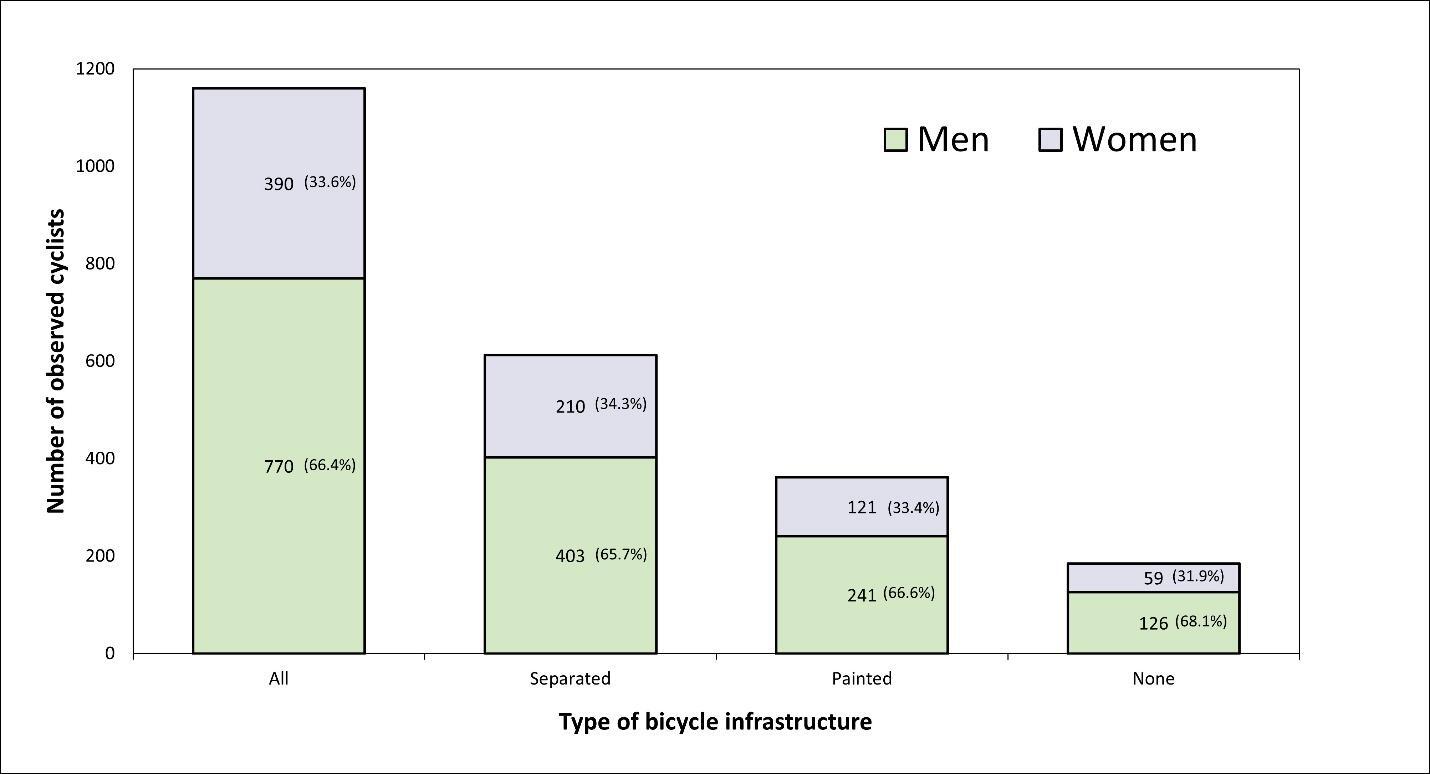
Figure 3
Figure 3.Gender distribution of adult bicyclists observed in Toronto, Canada in fall 2022 field observation, by infrastructure type (n=1160) whose gender could be visually assigned.
Table 3.Repeated measures logistic regression results: Association between observed gender and observation characteristics overall and stratified by observation day
ODDS Ratios (95% Confidence Intervals)
Variable Model A
Overall
Model B
Weekdays
Model C
Weekends
Outcome:
Observed Gender
Women
Infrastructure type None
Separated
Painted
Ref
1.03 (0.90, 1.17)
1.05 (0.91, 1.20)
Ref
0.99 (0.85, 1.17)
1.08 (0.92, 1.26)
Ref
1.11 (0.08, 1.27)
0.95 (0.82, 1.10)
Road Classification Major Arterial
Collector
Minor Arterial
Ref
1.07 (0.95, 1.20)
0.94 (0.86, 1.03)
Ref
0.96 (0.82, 1.11)
0.91 (0.79, 1.04)
Ref
1.27 (1.11, 1.44)
1.01 (0.98, 1.05)
Observation day Weekend
Weekday
Ref
1.16 (1.06, 1.27)
- -

The lack of significant gender variation in our study was unexpected as literature commonly suggests women prefer protected infrastructure (Aldred et al. 2017; Garrard et al. 2008; Winters et al. 2010). Our findings may reflect Toronto’s relatively new poorly developed cycling network, which women may be more sensitive to in terms of mode choice. As evident in Toronto’s online cycling map, the network exhibits many gaps (City of Toronto 2025). Our non-infrastructure comparison sites could be conceptualized as gaps in the network, which may have impacts beyond the immediate locality. Additionally, physical barriers on separated infrastructure were frequently broken or missing, reflecting maintenance and discontinuity issues which impacts both mode choice (Hull and O’Holleran 2014) and safety (Li et al. 2024). Additionally, the separated infrastructure was relatively new at the time of study (Rothman et al. 2024); post-pandemic habits and gender-based usage patterns are likely still evolving(Ong et al. 2024; Sweet and Scott 2023). Recent legislative threats in Ontario to remove existing bicycling infrastructure further complicate the future of Toronto’s network (Alevato 2025).

To conclude, men outnumber women two-to-one regardless of infrastructure design in Toronto. Achieving gender parity may likely need improvements to infrastructure quality, connectivity, and maintenance.

Submitted: December 19, 2025 AEST

Accepted: January 24, 2026 AEST

References

Aldred, R., B. Elliott, J. Woodcock, and A. Goodman. 2017. “Cycling Provision Separated from Motor Traffic: A Systematic Review Exploring Whether Stated Preferences Vary by Gender and Age.” Transp. Rev. 37 (1): 29–55. https:/​/​doi.org/​10.1080/​01441647.2016.1200156.
Google Scholar
Alevato, J. 2025. “Ontario Appeals Court Ruling That Blocked Toronto Bike Lane Removals.” https:/​/​www.cbc.ca/​news/​canada/​toronto/​ontario-appeal-court-ruling-bike-lanes-removals-1.7615644.
Bouris, N. S., and M. Winters. 2025. “A Gendered Analysis of the Mobility of Care Done by Bike in Victoria, Canada.” Findings, December.
Google Scholar
City of Toronto. 2024. Summary of Findings from the Transportation Tomorrow Survey (TTS) 2022. https:/​/​www.toronto.ca/​legdocs/​mmis/​2024/​cc/​bgrd/​backgroundfile-250546.pdf.
City of Toronto. 2025. “Cycling Network Map.” https:/​/​toronto.ca/​services-payments/​streets-parking-transportation/​cycling-in-toronto/​cycling-network-map/​.
Firth, C. L., M. Branion-Calles, M. Winters, and M. A. Harris. 2021. “Who Bikes? An Assessment of Leisure and Commuting Bicycling from the Canadian Community Health Survey.” Findings, ahead of print, May. https:/​/​doi.org/​10.32866/​001c.22163.
Google Scholar
Garrard, J., G. Rose, and S. K. Lo. 2008. “Promoting Transportation Cycling for Women: The Role of Bicycle Infrastructure.” Preventive Medicine 46 (1): 55–59. https:/​/​doi.org/​10.1016/​j.ypmed.2007.07.010.
Google Scholar
Goel, R., A. Goodman, R. Aldred, et al. 2022. “Cycling Behaviour in 17 Countries across 6 Continents: Levels of Cycling, Who Cycles, for What Purpose, and How Far?” Transport Reviews 42 (1): 58–81. https:/​/​doi.org/​10.1080/​01441647.2021.1915898.
Google Scholar
Hull, A., and C. O’Holleran. 2014. “Bicycle Infrastructure: Can Good Design Encourage Cycling?” Urban, Planning and Transport Research 2 (1): 369–406. https:/​/​doi.org/​10.1080/​21650020.2014.955210.
Google Scholar
Ledsham, T., G. Liu, E. Watt, and K. Wittman. 2013. Mapping Cycling Behaviour in Toronto. https:/​/​www.tcat.ca/​wp-content/​uploads/​2019/​09/​Mapping-Cycling-Behaviour-in-Toronto.pdf.
Li, H., Z. Zhang, H. Lv, and G. Ren. 2024. “Investigating the Safety Impacts of Discontinuities in Cycle Network: A Case Study of London.” Journal of Transportation Safety & Security 16 (1): 43–72. https:/​/​doi.org/​10.1080/​19439962.2023.2180561.
Google Scholar
Ling, R., L. Rothman, M.-S. Cloutier, C. Macarthur, and A. Howard. 2020. “Cyclist-Motor Vehicle Collisions before and after Implementation of Cycle Tracks in Toronto, Canada.” Accident Analysis & Prevention 135: 105360. https:/​/​doi.org/​10.1016/​j.aap.2019.105360.
Google Scholar
Ong, F., P. Loa, and K. Nurul Habib. 2024. “A Behavioural Analysis of Post-Pandemic Modality Profiles for Non-Commuting Trips in the Greater Toronto Area.” Travel Behaviour and Society 34: 100690. https:/​/​doi.org/​10.1016/​j.tbs.2023.100690.
Google Scholar
Pearson, L., D. Bhowmick, M. Winters, et al. 2025. Gender Differences in Bicycle Infrastructure Use and Preferences: A Disconnect between Ideals and Reality. https:/​/​doi.org/​10.2139/​ssrn.5108271.
Google Scholar
Rothman, L., K. Samsel, A. Howard, et al. 2024. “Pedaling Forward: The Evolution of Bicycling Infrastructure in 3 Canadian Cities from 2010 to 2022.” Inj. Prev. 30 (A72). https:/​/​doi.org/​10.1136/​injuryprev-2024-SAFETY.169.
Google Scholar
Sweet, M., and D. M. Scott. 2023. “What Might Working from Home Mean for the Geography of Work and Commuting in the Greater Golden Horseshoe, Canada?” Urban Studies 61 (3): 567–88. https:/​/​doi.org/​10.1177/​00420980231186499.
Google Scholar
Winters, M., J. Beairsto, R. Mitra, et al. 2023. “Pedal Poll/Sondo Vélo 2021: A Community Science Project on Who Cycles in Canada.” Journal of Transport & Health 30: 101606. https:/​/​doi.org/​10.2139/​ssrn.4000804.
Google Scholar
Winters, M., G. Davidson, D. Kao, and K. Teschke. 2010. “Motivators and Deterrents of Bicycling: Comparing Influences on Decisions to Ride.” Transportation 38 (1): 153–68. https:/​/​doi.org/​10.1007/​s11116-010-9284-y.
Google Scholar
Winters, M., M. Zanotto, and G. Butler. 2020. “The Canadian Bikeway Comfort and Safety (Can-BICS) Classification System: A Common Naming Convention for Cycling Infrastructure.” Health Promot Chronic Dis Prev Can 40 (9): 288–93. https:/​/​doi.org/​10.24095/​hpcdp.40.9.04.
Google Scholar

Attachments

Powered by Scholastica, the modern academic journal management system